Letterboxd Is Your Viewing Memory. It's Not Your Shelf.
I'm a Letterboxd patron with four of their t-shirts. It's one of the best things that's happened to film culture online. It also had no idea I owned the Fight Club Blu-ray.
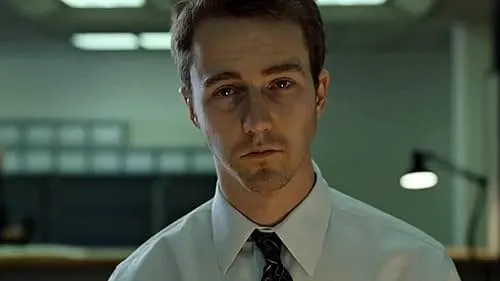
My oldest son wanted to watch Fight Club with his friends. He'd claimed the home theatre for the evening, a group of teenagers in the reclining seats, and Fight Club was the plan.
I knew I owned the DVD. I'd bought it on the first run after the theatrical release. But I thought I also owned the Blu-ray, and I wanted to put the better version on for them. I looked through the shelf for ten minutes. Couldn't find it. The shelf isn't a disaster, exactly, but my collection has outgrown it. The 4Ks, Blu-rays, and DVDs have piled into stacks that don't fit anywhere properly, and until I get something better suited I haven't put the effort into organizing them. I told him to go ahead with the DVD.
A few months later, I started entering my collection into Arkiv. The Fight Club Blu-ray showed up in one of the stacks of discs that don't fit on my shelf. I'd owned it the whole time.
I've been on Letterboxd since the beginning. I became a patron-level member as soon as that was an option and have renewed every year without thinking about it. I own four Letterboxd t-shirts. I want to be clear about all of this before going any further, because nothing that follows is a criticism of the platform. I think it's one of the best things that has happened to film culture online.
But Letterboxd did not help me figure out if I actually owned the Fight Club Blu-ray. And it was never going to.
What I use Letterboxd for is a film community and a record of what I've watched. That's it, and that's more than enough. I log films I saw in a theatre. Films I streamed. Films I watched on Blu-ray. Films I caught at 1am on cable years ago and have been meaning to revisit. Letterboxd doesn't care how I watched something, and neither does my log. What matters is that I watched it, that I have a rating, maybe a note.
Letterboxd has no obligation to know what's on my shelf, and I've never thought it should. I don't need to own something to watch it. I watch films on streaming platforms constantly and they go straight into my log like everything else. The fact that I won't own those films afterwards is irrelevant. The viewing record is the thing.
There's a workaround some people use: a Letterboxd list called "My Collection" or "Films I Own." I understand the instinct. You're already in Letterboxd, the infrastructure is there, why not use it?
The problem is that a list is a binary. It knows whether a title is on it. It doesn't know which edition you own. It doesn't know you have the Criterion Blu-ray, not the old studio release from 2009. It doesn't know you upgraded from DVD and the DVD is still in a box somewhere. It doesn't know you lent a copy out six months ago and haven't gotten it back. It treats "own it" as a single fact when physical collecting is a set of facts, some of which change.
Approximately six months after you start maintaining that list, it's six months out of date. A list doesn't solve the problem. It just moves it.
The layer a viewing log can't capture is the disc itself, not the film.
The Alien franchise is one of my favourites, right up there with Star Wars. I have strong opinions about it and I own a lot of it, across multiple box sets and individual releases over the years. If you asked me right now to account for every copy of Aliens I own across every format and box set it's appeared in, I could not do that from memory. There are versions in at least three different collections on that shelf, possibly more.
Letterboxd knows I've watched Aliens. It has no column for which release I'm actually holding, whether the transfer is the one worth recommending, or how the supplemental materials compare across editions.
That information lives in my head, or it doesn't live anywhere. A collection record is where it should actually be.
The way Arkiv handles reviews reflects this distinction. The intent was a place to write about the disc: transfer quality, audio mix, whether the special features are worth sitting through, whether a particular restoration looks washed out compared to an earlier release. The kind of notes that matter when you're deciding which edition to buy, or when you want to remember months later why you chose one version over another. Useful for a franchise like Alien where the same film has appeared across many releases and not all of them are equal.
That said, I'm not telling anyone how to use it. If you want to use the review field the way you use Letterboxd and record your thoughts on the film itself, that's fine. And if you've already written those thoughts in Letterboxd, you can bring them over. The import pulls in your watch history, your ratings, your notes. That data is yours. If you want both platforms to reflect how you feel about Aliens, they can both know.
The import isn't about replacing one platform with the other. It's about not having to choose which one gets to hold your history.
What I find useful is running both in parallel and treating them as what they are. Letterboxd is the community, the cultural record, the place where serious film people talk about film. Arkiv is the inventory, the physical record, the shelf made searchable.
They complement each other in the same way that knowing you've seen a film and knowing you own it are different kinds of knowing. Both are real. Both are worth tracking. Neither substitutes for the other.
My son's movie night was about six months ago. He and his friends watched Fight Club on DVD. The Blu-ray was in the house the whole time.
That copy is now in Arkiv, properly logged, findable in about three seconds. I still log every watch on Letterboxd. I still have the t-shirts.
Arkiv is a platform for tracking your physical media collection and building a portrait of your tastes, while also chronicling your shelf's journey.
0 Comments
Sign in to join the discussion.