No One Decided to Delete Terminator 2
Sony is removing 551 films from PlayStation libraries on September 1, including Terminator 2 and The Deer Hunter. I went looking for someone to be angry at. The unsettling part: there isn't one.

The message Sony is sending to PlayStation customers is almost polite about it. It tells you that on September 1, 2026, you "will no longer be able to access your previously purchased content from StudioCanal, and it will be removed from your video library." Previously purchased. Removed. Both words in the same calm sentence, as if they don't contradict each other.
It's 551 films and TV series. No refunds. The reason given is "our content licensing agreements," which is the corporate way of saying a deal you were never shown, between two parties you've never met, came to an end.
My first thought wasn't about ownership or licensing or any of the things I've written about before. It was simpler than that. I looked at which films were on the list.
Because if you're going to quietly delete movies out of people's libraries, you'd expect it to be the stuff nobody would notice. Some direct-to-video thriller from 2009. A forgotten rom-com. The kind of title that's only in your library because it was bundled into a sale years ago and you clicked yes.
That is not what this is.
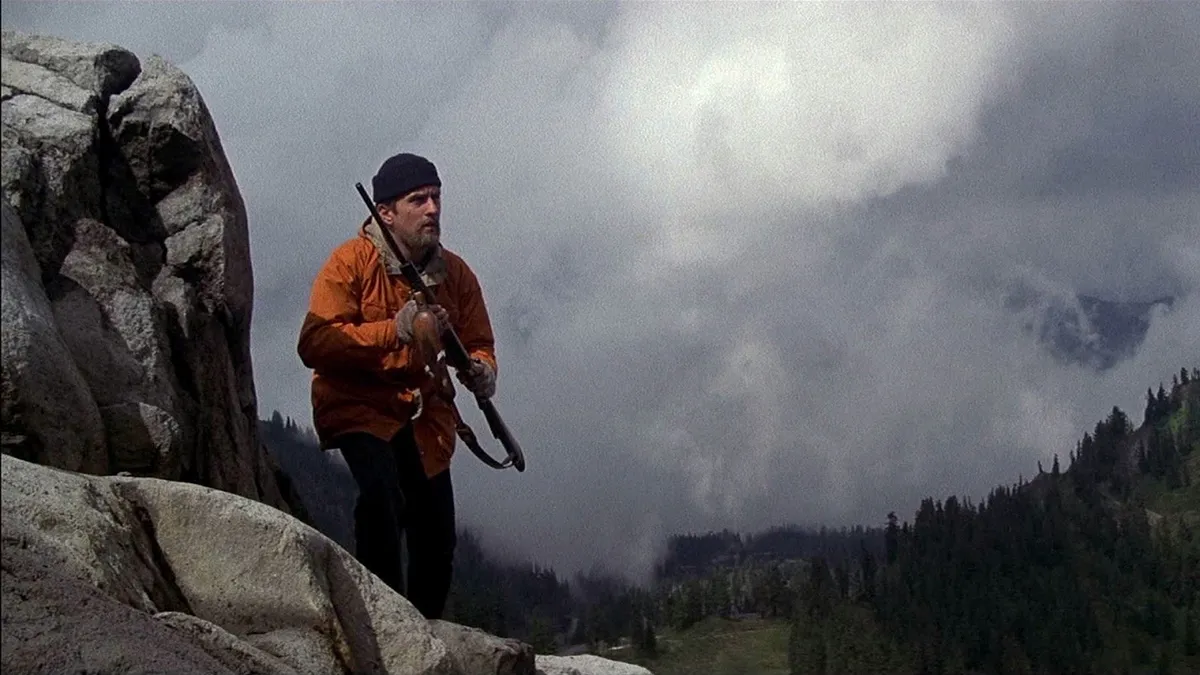
This is Terminator 2: Judgment Day. Total Recall. First Blood, the film that started Rambo. From Dusk Till Dawn. The Deer Hunter, which won Best Picture. These are not the long tail. These are the spine of the thing. If you made a list of films you'd assume were too foundational to ever be at risk, half of it is on the deletion notice.
That's what stopped me. Not that some movies are disappearing, but that these movies are.
So I did what you do. I went looking for someone to be angry at.
Sony was the obvious candidate. They run the store, they sent the email, they're the name on the deletion. Easy villain. Except the more I read, the less it held. Sony didn't sit in a room and decide that PlayStation owners should lose Terminator 2. A distribution agreement between Sony and StudioCanal reached the end of its term, and when that happens, every title under it simply falls out the bottom. Nobody picked these films. Nobody picked this date because of these films. The date is just when the paperwork expires.
That's the part that actually unsettled me, more than any of the usual stuff about not really owning digital purchases. I know that already. We all sort of know that already.
What I hadn't sat with is this: there is no one at the wheel.
A villain you can boycott. A greedy executive you can name, shame, pressure into a refund. Those are almost comforting, because they imply a decision was made, which implies a decision could be unmade. This isn't that. No one decided to delete Terminator 2. It's being deleted by the quiet machinery of a contract lapsing, and that machinery does not know what Terminator 2 is. It doesn't know one of these files is a landmark of action cinema and another is a movie nobody's thought about in fifteen years. To the deal, they're identical line items, expiring on the same Tuesday.
Here's the thing the famous titles actually reveal. We assume importance is a kind of protection. We assume that somewhere, someone is responsible for making sure the big films, the canon, the ones that matter, stay available. That The Deer Hunter has a guardian because The Deer Hunter is The Deer Hunter.
It doesn't. There's no guardian and no villain, just a deal, and deals end. The reason the famous films are on the list is that fame was never a variable in the equation. Nothing in that system protects a movie for being good, or beloved, or historically important. It's all the same license, and the license doesn't read reviews.
So the blockbusters aren't the exception to the rule. They're the proof of it. If Terminator 2 can be scheduled for deletion, then nothing in a digital library is load-bearing. The popularity you were quietly counting on to keep your favourites safe was never doing any work at all.
I want to be fair to the part of you that still wants a villain, though, because I feel it too. "No one at the wheel" is the structural truth, but underneath the lapsed contract are decisions that real people made, and we don't get to see any of them. Did Sony try to renew the StudioCanal deal and balk at the price? Did StudioCanal ask for something unreasonable? Did anyone on either side stop and say, hold on, thousands of people paid us for these films, what happens to them?
I genuinely don't know, and that isn't me being coy. As far as I can find, neither company has said a word beyond the notice. No "we fought to keep these available." No "the terms didn't work for us." Just the date and the calm sentence. That silence is its own kind of answer, because if anyone had gone to bat for the customer here, you'd think they'd want the credit.
And here's the part that nags at me. Sony already has the money. The sale of Terminator 2 closed long ago, that revenue is booked and banked and spent. Deleting the film in September claws nothing back, because there's nothing left to claw back. So honoring those purchases wouldn't cost Sony the original sale, it would only cost whatever StudioCanal wanted to renew the license. Somewhere, quietly, that renewal fee got weighed against the goodwill of people who had already paid, and the people who had already paid lost. We don't know the number. We just know which way it went.
That's not quite a villain. But it isn't nobody, either. It's a decision not to spend, made on your behalf, about something you were told you owned, with you nowhere near the room.
There's a disc of Terminator 2 on my shelf. I'm looking at it right now.
It does not know that StudioCanal exists. It has never heard of a licensing agreement, and it will never be a line item in one. It cannot fall out the bottom of a deal it isn't party to, because it isn't party to any deal. The film is on the disc, the disc is on the shelf, and no contract anywhere in the world expires in a way that changes that.
That's the whole difference, and the StudioCanal list draws it in bright lines. Every one of those 551 films exists on disc. The people who own Terminator 2 on Blu-ray are not getting an email. September 1 is just a Tuesday for them. And notice what they never have to wonder: whether Sony tried hard enough, whether the renewal was too expensive, whether anyone weighed their purchase against a licensing fee. None of that touches them, because they were never relying on it. They opted out of the machinery without even thinking of it as opting out. They just bought the thing instead of the access to the thing.
I'm not writing this to tell you streaming is evil or that you should never buy a digital film again. I still do both. Most of what I watch I'll never own, and that's fine, because I never believed I owned it. Renting has always been honest about being renting.
The dishonest word is "buy." The button that says "Buy" next to a film you'll lose in September was always describing a lease with no end date printed on it. This is just the month the end date showed up.
So when people ask why I still bother with discs in 2026, when everything's right there in the cloud, this is the cleaner answer than the one I usually give. It isn't nostalgia and it isn't audio quality and it isn't even really about ownership in the abstract. It's that a disc is the only copy of a film that no one, not Sony, not StudioCanal, not a lapsed contract, not anyone, has the standing to delete. There's no one at the wheel of the digital library, and that turns out to be exactly the problem. The shelf doesn't have a wheel. It just has the film.
Arkiv is a platform for cataloguing your physical media collection. The discs on your shelf are the copies no licensing deal can revoke, which makes it worth knowing exactly what you've got: what's safe on a shelf, what you only ever rented, and what you meant to buy for real before the deal expired. It was built to keep that record straight, and there are a few quietly rewarding things to uncover as your collection grows.
0 Comments
Sign in to join the discussion.