The Cardboard or the Movie
I designed and built a real home theater myself, speaker wire and all, and hid every speaker behind the screen and in the walls. Turns out that's the same instinct behind how I buy discs.
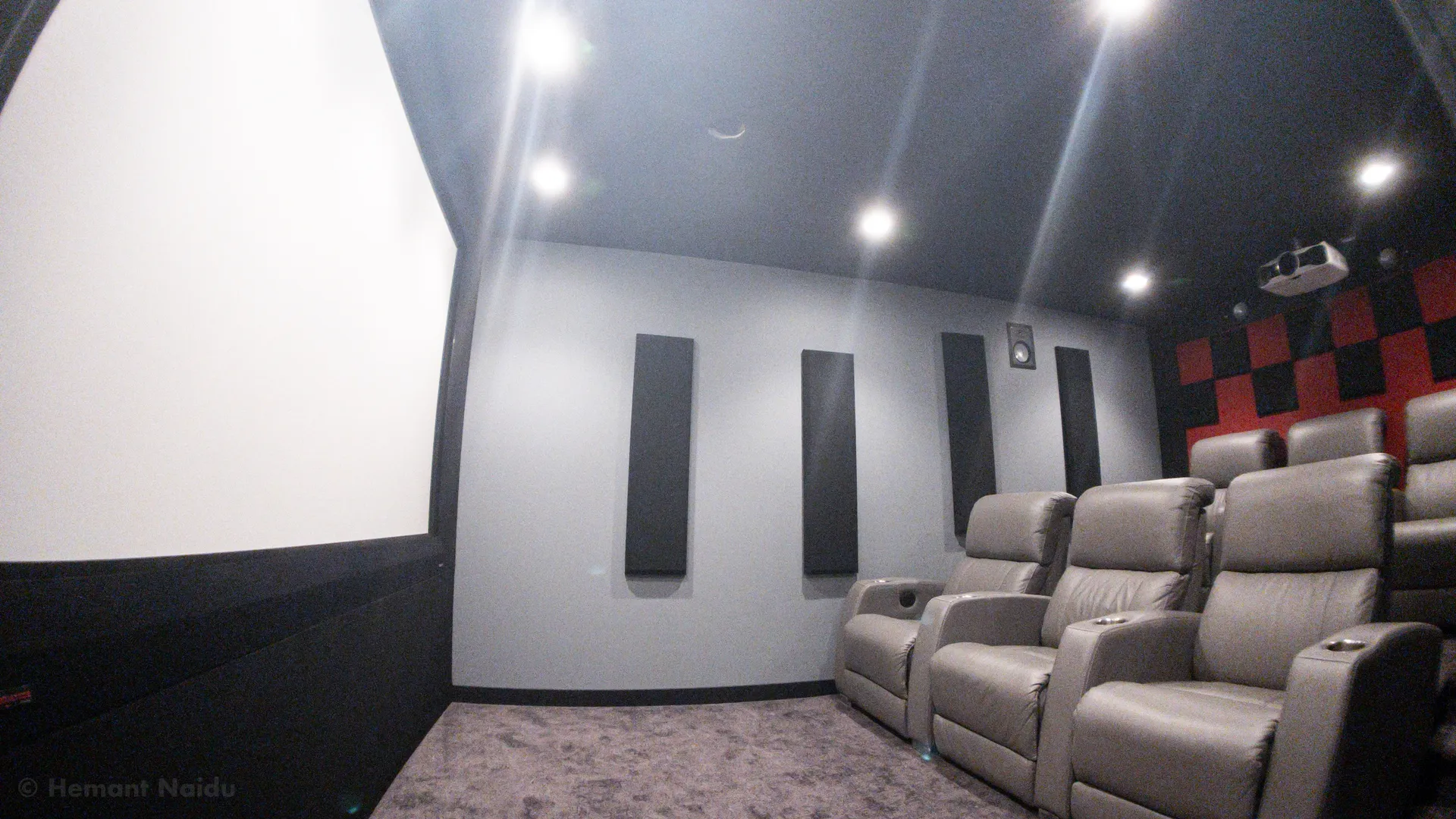
A few years ago I designed and built a dedicated home theater myself. I hired out the electrical, because that's a pro's job and I wasn't going to argue with code. The framing and drywall I could have done myself, honestly, but that's not where I wanted to spend my time, so I hired that out too and put my own hours somewhere else. Everywhere else, I was the one doing the work. I built the riser for the second row of seating. I built the false wall the acoustically transparent screen hangs on, with the front speakers sitting behind it, invisible. I built the facade around the screen itself. And I ran every speaker wire, every run of low-voltage cable, by hand, through walls I'd already mapped out before the drywall crew ever showed up. No home theater installer, no AV integrator walking through with a clipboard. It was a genuine project, the kind of thing that eats a year of weekends and a lot of decisions you didn't know you'd have to make until you were standing in an unfinished room holding a spool of speaker cable, trying to figure out the cleanest path to a ceiling.
Here's the decision that drove the whole layout: I wanted every speaker hidden. Not tucked away tastefully, hidden. In the walls, in the ceiling, behind the false wall I built specifically so the front speakers could sit there, invisible, firing through an acoustically transparent screen. That's most of why I built that wall myself instead of handing the whole room to someone else. If a speaker's location was going to be a compromise, I wanted that to be my compromise, made on purpose, not a shortcut somebody else took because a particular wall was inconvenient to run cable through. I didn't want a room that showed off the equipment. I wanted a room where you forgot the equipment existed entirely, so there was nothing between you and the movie.
The masking system is the same instinct pointed at a different problem. Films don't all come in the same aspect ratio, so without masking you either live with fixed grey or black bars framing every image, permanently, whether the movie in front of you needs them or not, or you watch a scope film shrunk down inside a screen sized for something else. My masking closes in around whatever's actually playing, so the frame stops right where the image stops. No bars sitting there doing nothing, reminding you there's a screen and not just a picture. It's a small thing, mechanically, motors and a track and some black velvet. But it's the same argument as the speakers: get rid of anything that isn't the movie, and the movie is the only thing left to look at.
For a lot of people, home theater is the hobby. There are whole communities built around it, forums full of people upgrading receivers, chasing the next speaker configuration, showing off a rack of gear like a car engine bay. Nothing wrong with that. It's a real, legitimate way to love the format, and I understand the appeal even if it's not mine, because I spent a year deep in exactly the same forums learning how to do the wiring correctly. It's just that once mine was built, it was done. It's a room that plays movies the best way I know how, the same way my laundry room washes clothes. I still pay attention to what's new in the space, because I want the experience to keep holding up, but I'm not in there swapping components on a Saturday for the fun of swapping components. The project ended when the last speaker went quiet behind its panel and the picture came up clean.
I didn't think about that project again until I noticed I was making the exact same decision about discs.
There's a version of physical media collecting that's really about the movie. The point is that the film exists in your library, permanently, in a form nobody can quietly delete off a server somewhere. The disc is the vessel. What matters is what's on it.
And there's a version that's really about the object. The steelbook. The numbered slipcase. The edition that sells out fast and later changes hands for well more than it cost on release, sometimes for a case that doesn't even have a disc in it anymore, just the packaging itself, because at that point the packaging is the collectible. Boutique labels have leaned into this hard, and it works, because scarcity is a real feeling and a beautiful object is a real thing to want. I don't think that's a lesser way to love the format. A gorgeous slipcase with real art direction and a well-written booklet is somebody's craft, same as a well-run home theater community swapping notes on speaker placement is somebody's genuine community. It's just aimed at a different part of the experience than the part I care about.
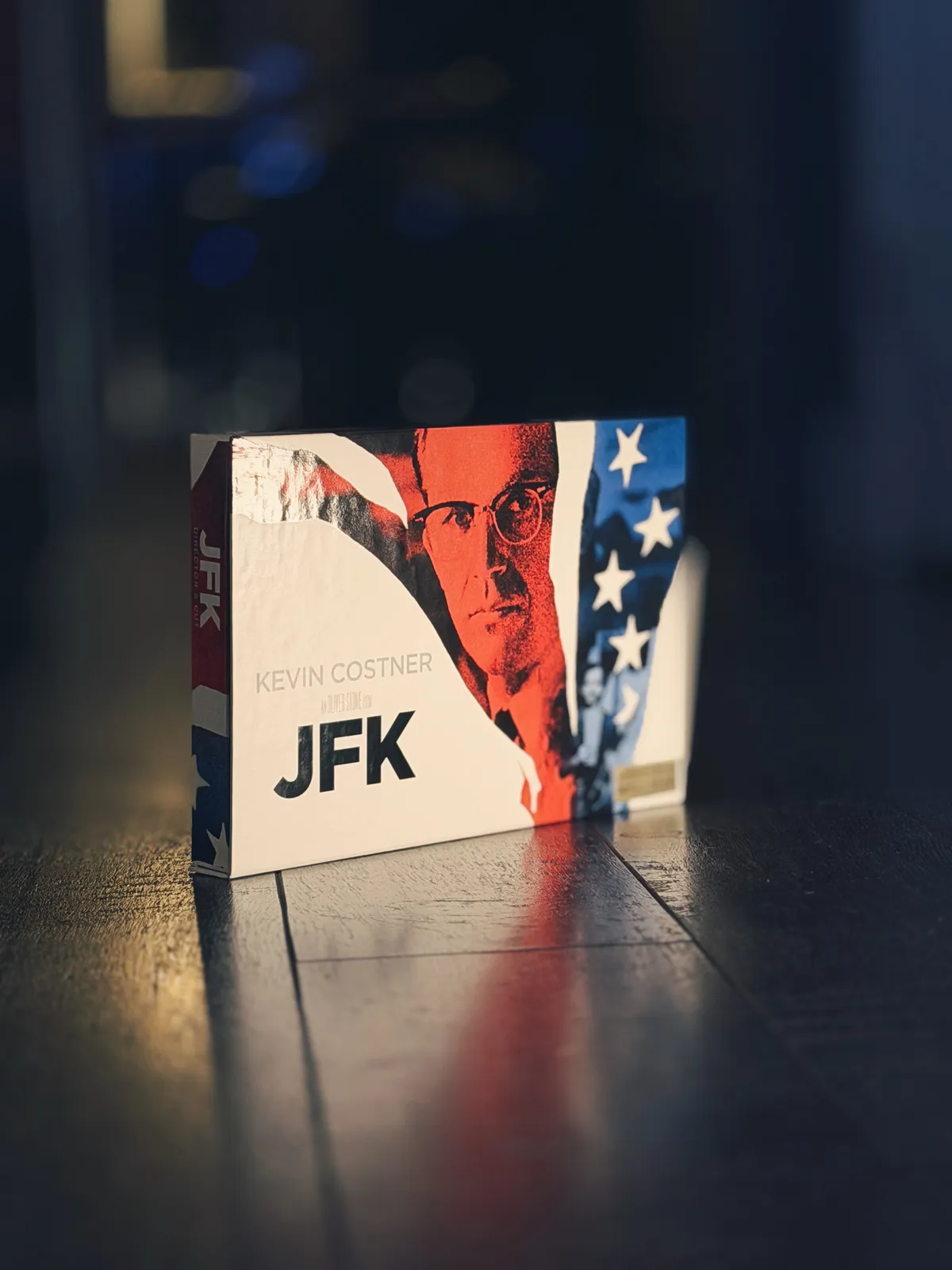
Neither of these is the correct way to collect. I want to be clear about that, because it would be very easy to write the rest of this post as a superiority contest, and that's not what it is. Some people build a legendary home theater and love every hour spent upgrading it. Some people build a shelf where half the value is in the specific print, the specific run, the specific case. Both are real hobbies, practiced with real care. There's no right answer, same as there's no right answer for how you build a theater room.
I just know which side I land on.
For me, it's about the movie. If I'm choosing between a steelbook and a standard case sitting next to each other on a shelf at the same store, I'll usually pay a little more for the nicer one. It's not a big decision. But the nicer packaging isn't why I bought it, and if the steelbook weren't there, the standard edition would do exactly the same job, because the job is making sure the film exists in my library. I'm not hunting sold-out runs. I'm not tracking resale prices. I just want the movie.
I want to be careful here, because there's one thing that could look like object-chasing and isn't. If a film gets a new restoration, a cleaner transfer pulled from better source material, I will absolutely double-dip and buy it again, disc and all. That's not the packaging talking. A better transfer means I'm actually seeing more of the movie, closer to how it was supposed to look, with less noise and compression and print damage standing between me and the thing itself. Chasing a better presentation of the film is, if anything, the purest version of caring about the movie rather than the object. It's the steelbook that doesn't move me, not the 4K remaster that finally does the picture justice.
There's still a real exception to the "just want the movie" rule, though, and this one actually is about the object, not the transfer. Alien. Star Wars. E.T. The Goonies. For that short list of films, I will go out of my way for a particular print, a particular edition, a particular release, independent of whether it's the best-looking transfer available. Those are the exceptions, not the rule, and I think that's true for most people who'd otherwise describe themselves as "just here for the movie." Everybody has two or three titles where the vessel stops being incidental and becomes personal.
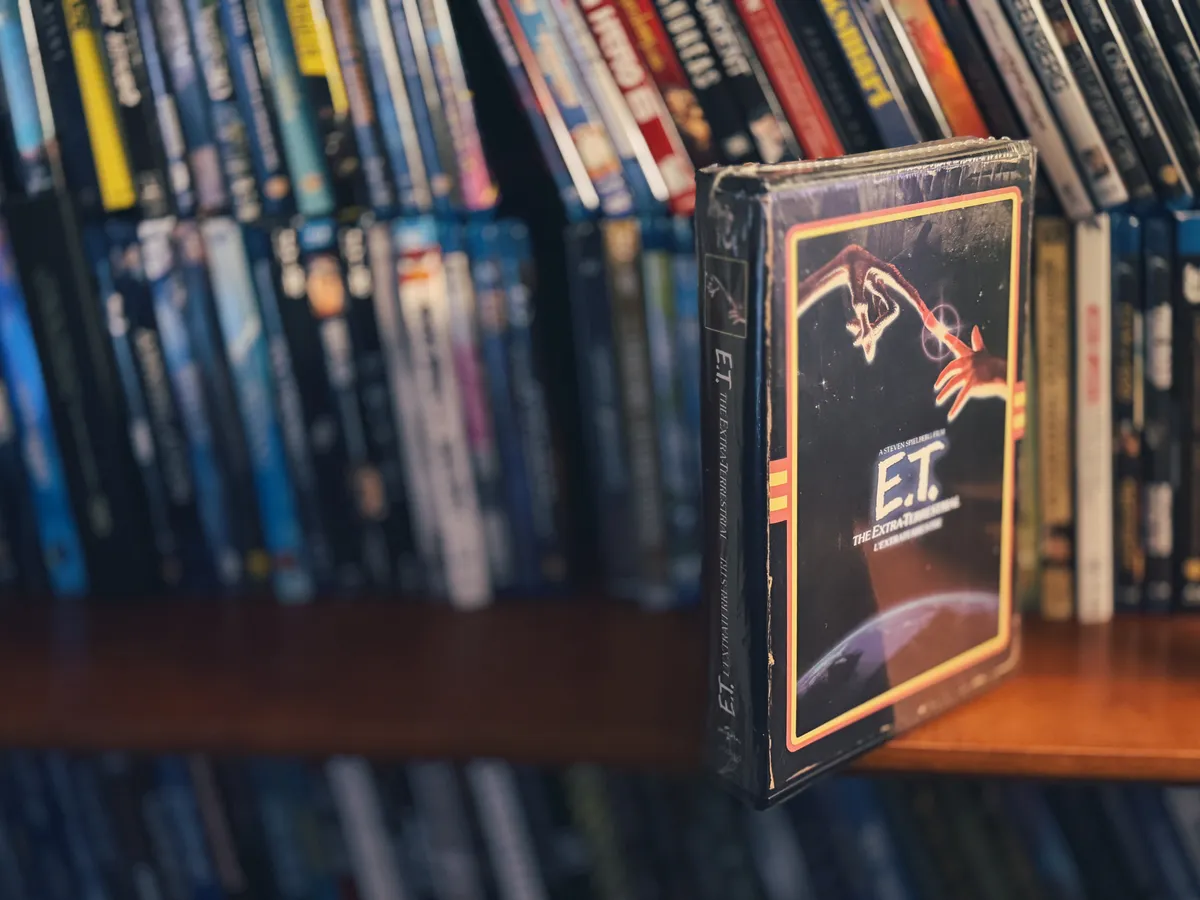
There's a third thing people chase that isn't quite the packaging and isn't quite the movie itself, and it deserves its own mention: special features. Back in the DVD era, you didn't really have to chase this. Commentary tracks, deleted scenes, making-of documentaries, a genuinely stacked special features section was close to the default, not the exception, and I watched nearly all of it on nearly everything I bought. Somewhere between then and now, that stopped being guaranteed. A disc with a real special-features section became something you have to specifically go looking for, rather than something you could just assume was in the box. I still love special features, genuinely, but if I'm honest about where I am in my life today, I don't sit down and work through a disc's bonus material the way I used to. So chasing an edition specifically because it has a better special-features package isn't something I typically do anymore, not as a rule. Except, predictably, for the same short list as before. If it's Alien or Star Wars, I probably do want the version with three hours of behind-the-scenes footage on it, even knowing I might not get to all of it for another year.
That's the same shape as the theater room, when I look at it straight on. I hid the speakers because the room wasn't the point, the film was. But if you asked me about the screen itself, the actual size and quality of the picture, I got very particular, very fast. That was one of the two or three things I wasn't willing to treat as incidental.
Most of collecting, and most of home theater, is background. It's in service of something else. But everybody keeps a short list of things where the background quietly becomes the whole point, and you don't usually get to choose that list in advance. It just turns out to be Alien for me, and a projector screen, and not much else.
I don't think there's a way to sort collectors into two clean camps, movie people and object people, and I'd be suspicious of a post that tried. It's a spectrum, and most of us are somewhere in the middle of it, with a handful of specific exceptions poking through wherever we personally happen to care. The interesting question was never which end you're on. It's noticing where your own exceptions are, and being honest that they're there.
I'd guess the theater room and the shelf will keep telling on me the same way for as long as I keep both of them. I'm not going to start chasing steelbooks, and I'm not going to start swapping speakers for the fun of it. But I already know Alien isn't the last exception I'll make, on either side of the house. Something will show up eventually, some print or some piece of gear, that quietly moves from background to the point, the way a handful of things already have. I just don't get to see the list ahead of time. Nobody does.
Whichever end of that spectrum you're on, or wherever your exceptions live, Arkiv catalogs the collection you actually have, editions and all, so you always know what's on the shelf, whatever size it is right now. There are some fun things to uncover about your own collecting habits as it grows. See what your shelf says.
0 Comments
Sign in to join the discussion.