The Collection You Can Actually Leave Behind
My sons fall asleep to the Ready Player One audiobook on a loop. It's the film I'd most want to leave them. You can't will an iTunes library to anyone. A shelf of discs is a different story.
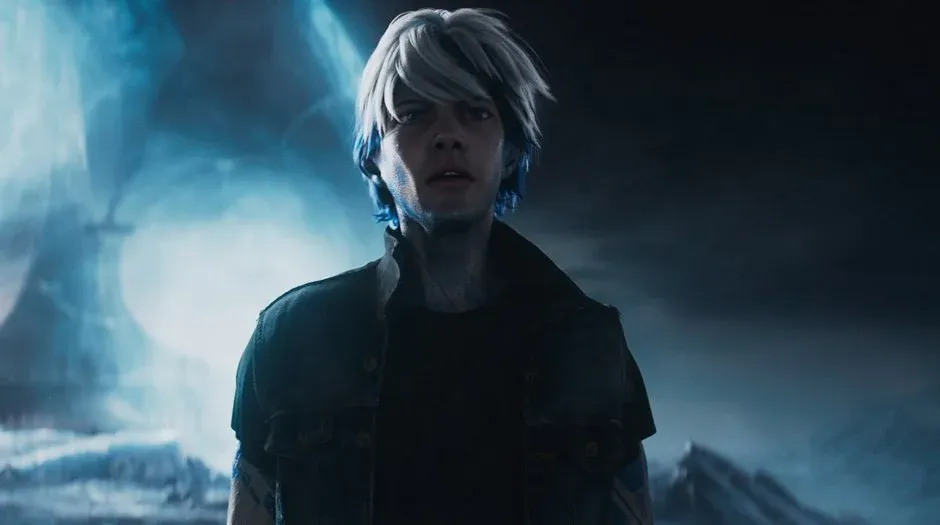
For a long stretch of their childhood, both of my sons fell asleep to the same audiobook. Every night, on a loop. It was Ready Player One.
This was not a phase that lasted a week. The older one started it and the younger one soon followed suit. They read the book more times than I can count. They had the audiobook running in the background while they did homework, while they built things, while they drifted off. For years, if you walked past either of their rooms late at night, you'd hear Wade Watts narrating his way through the OASIS at a volume just above silence. It was the soundtrack of this house after dark.
So when the film came out, there was no question. We saw it opening weekend, the three of us, and my boys spent the whole runtime quietly clocking what the movie kept and what it changed. They knew the source material cold.
I should say that Ready Player One is not considered top-tier Spielberg. General audiences gave it a shrug. I don't care. I loved it, my kids loved it, and we loved it together, which is a specific kind of thing that doesn't happen as often as you'd think once your children get old enough to have their own taste.
It also lands in a particular place for me, because Spielberg is woven through my entire childhood. E.T., Close Encounters, the Indiana Jones films. And that's just the ones he directed. The ones he produced were just as formative: Goonies, Back to the Future, Gremlins. A meaningful portion of who I am as a person who loves film traces back to that man's filmography. So there's a rhyme I can't ignore in the fact that the film bonding me to my own kids, decades later, is also one of his.
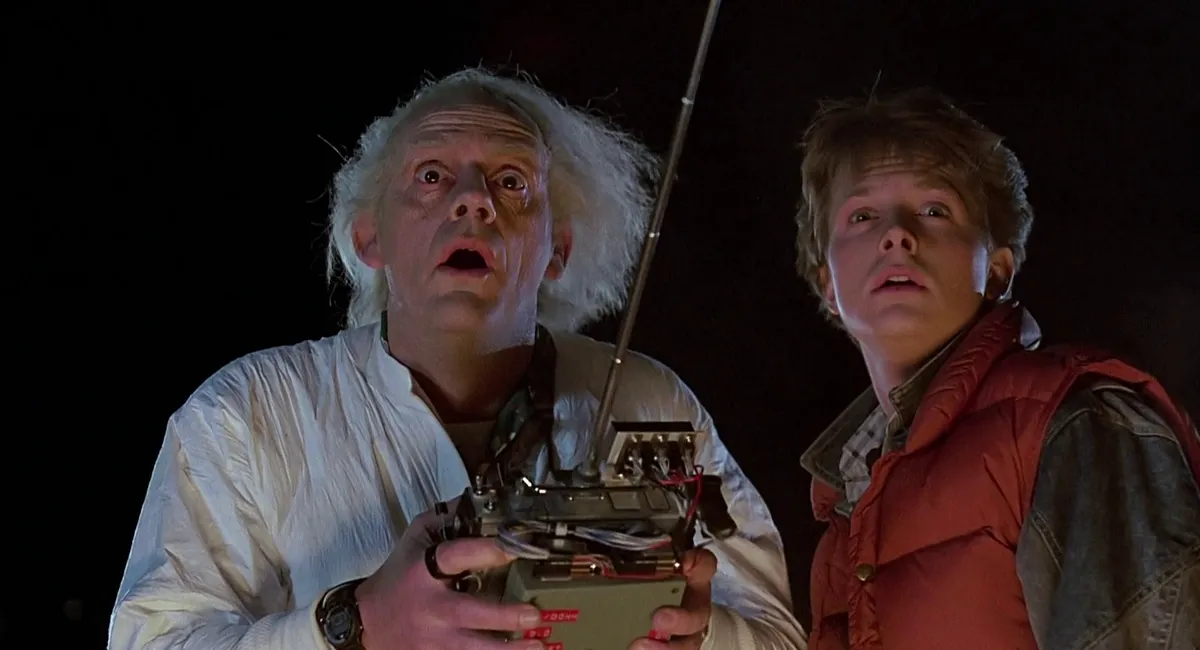
I have 884 physical copies in my collection. Blu-rays, 4K discs, DVDs, a few Steelbooks, formats I've upgraded and films I've owned in three versions. If you asked me which single disc I'm most moved to hand down to my boys, I wouldn't reach for the prestige pick. I'd reach for Ready Player One, because it's theirs as much as mine.
Here is the part I didn't think about until recently.
Ready Player One is set inside the OASIS, a virtual world where almost nothing is owned. You unlock things. You rent them. You earn access and you lose it. The entire plot turns on a kid trying to win something real inside a system designed so that nothing quite belongs to you. I'd watched that film several times before it occurred to me that I'm living a low-stakes version of the same problem with my own media.
I went looking, at one point, into whether I could actually leave my digital libraries to my kids. I assumed there would be some process for it. A form, a beneficiary field, a setting buried three menus deep. There isn't, and the answer genuinely surprised me.
When you "buy" a film on iTunes, you are not buying the film. You're buying a license to watch it, granted to you personally, and that license is non-transferable. There's a phrase that comes up in this corner of the world: right of survivorship. It's the legal mechanism by which something you own passes automatically to someone else when you die. A house can carry it. A bank account can carry it. Your iTunes library specifically does not. The terms are explicit that your account and the content in it are tied to you, and the rights end when you do.
Apple even has a feature now, called Digital Legacy, that lets you name a person to access your account after your death. I went and read what it actually covers. Photos, messages, notes, files. Not your purchased movies and music. The one category I've deliberately spent real money on, for years, is carved right out of the thing designed to let you pass your digital life on.
People have gone to court over exactly this, arguing that a button labeled "Buy" ought to mean you've bought something rather than rented it for an unspecified length of time. None of it has changed how any of this works. And it isn't only Apple. The same logic runs through Steam, through Spotify, through every service where you've quietly assembled something that feels like a collection. You can spend twenty years building a library of a thousand films, and the day you're gone, there is no one to leave it to, because there is nothing there to leave. There's only access, and access does not survive you.
My iTunes library dies with me. None of it passes to my sons. The years of choices, the things I tracked down, the stuff I bought specifically because I wanted it to last: legally, it just evaporates.
The disc on the shelf does not. A disc has no account attached to it. It doesn't know I died. It plays for whoever holds it next, and that person can be my kid.
There's the irony, and I'll only say it once: the film about a world where you can't own anything is the one thing from that story I can actually give my children, because I bought it on a disc.
And it isn't just Ready Player One. That's the title that made me notice, but the thing I'm really talking about is the whole shelf.
The Spielberg films I grew up on. The Alien sets I've rebuilt and re-bought across decades. The Patrick Swayze films I will defend to anyone. The former rental copies with the chain's sticker still on the case, bought for a few dollars each when the big rental stores were going under and places like Blockbuster were clearing out their shelves. Eight hundred and eighty-four discs that are, taken together, a fairly complete picture of what I've cared about for most of my life. That's not clutter. That's a document. And unlike everything in my Apple account, it's a document I can leave to someone.
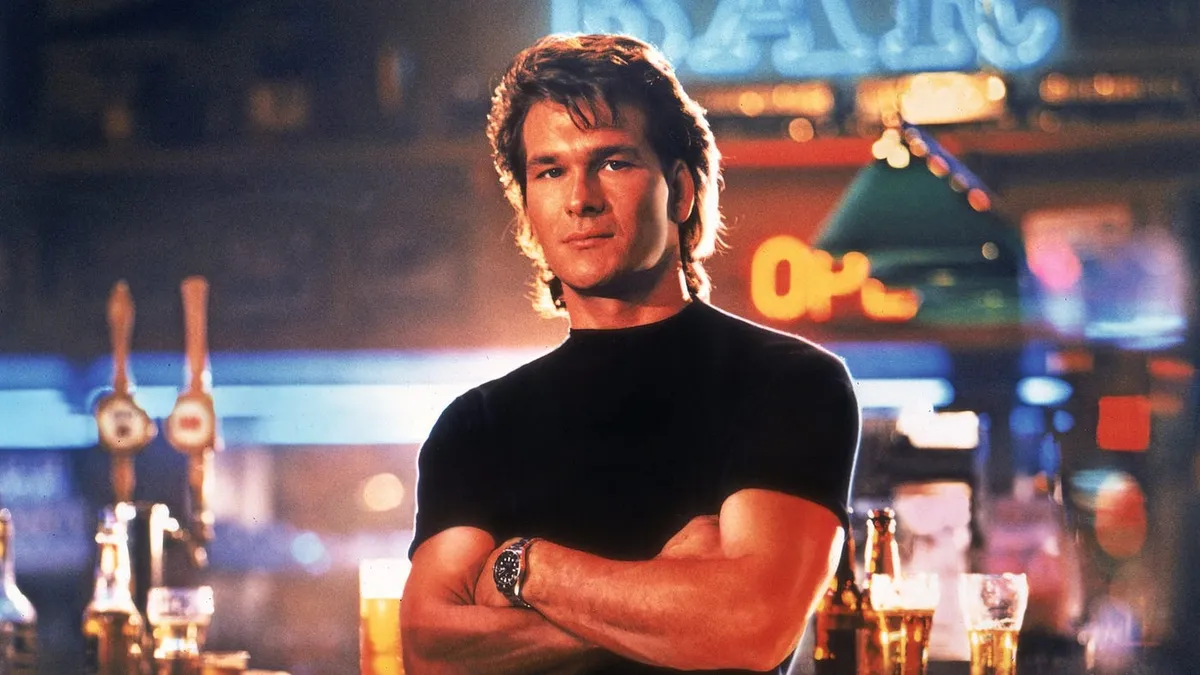
The strange and lucky part is that I don't have to wait to hand it over. My fifteen-year-old took a media studies class this past semester and came out of it thinking about film differently, more deliberately, with a vocabulary he didn't have before. He's the one who hosts movie nights for his friends in our home theatre now. He pulls things off my shelf without asking, which is exactly as it should be. The inheritance isn't a document I file away for some distant date. It's already happening. He's already reaching for it.
I still pay for the streaming services. I still buy the occasional digital copy when there's no disc to be had. None of that is going anywhere, and I'm not pretending it should. But the things I actually want to outlive me, the ones I'd want my sons to still have when they're my age and I'm not around to recommend anything, those are on the shelf, on discs, where no license can quietly take them back.
A login is something you borrow. A shelf is something you leave.
Arkiv is a platform for cataloguing your physical media collection. A shelf of hundreds of discs is only an inheritance if the next person can make sense of it, and that's the part it was built for: turning a wall of titles into something legible, knowable, and ready to hand down. There are also a few quietly rewarding things to uncover as your collection grows.
0 Comments
Sign in to join the discussion.