The Video Store Came Back. Nobody Asked Permission.
A couple in Philly with 20,000 titles and a basement. A nonprofit in Minneapolis charging $10 a month. A Toronto shop that drew 8,000 people in ten days. The video store is back.
On October 16, a store called Cinema Cellar opened its doors at 129 John Street in Toronto, a short walk from TIFF Lightbox. It sells Blu-rays and 4K discs: Criterion, Arrow, Kino Lorber, special editions, the lot. It carries nearly the entire Criterion catalogue the label distributes in Canada.
The timing wasn't an accident. The next day was International Independent Video Store Day, which falls on the third Saturday of October and has been celebrated since 2010. It started in Toronto.
Cinema Cellar didn't open on a hunch, either. During TIFF this year, the company turned its future storefront into a Criterion pop-up, and its president, Dave Hudakoc, told the Toronto Guardian that close to 8,000 people came through over the festival's ten days. That's not a niche. That's a line out the door.
I've read a lot of articles over the years about the death of the video store. I don't think I've ever enjoyed reading the reverse as much as I have this fall.
Toronto isn't alone. Over the past few months, small video stores have been popping up in cities that haven't had one in years, and almost every one of them is a story about real people putting real money on the line.
In South Philadelphia, Dylan and Keri Wise are opening Little Movie Store at 2001 South 10th Street. They have about 20,000 titles. Roughly 7,000 will be on the floor, and the rest will be searchable online, fetched from the basement on request. A membership costs $160 a year and gets you a physical card, three titles out at a time, 10% off the candy rack, and a free movie on your birthday. When PhillyVoice wrote about them, 465 people were already on the waitlist.
My favourite details from that story: they're still searching for a LaserDisc player so members can rent one, and they don't have a VHS copy of Eraserhead yet. That's a store run by collectors. You can tell because they know exactly what's missing.
In Minneapolis, Sierra Parham spent three years running Saturn Video as a series of pop-ups at markets and theaters before setting a date for a permanent storefront this month. It's a nonprofit, with fiscal sponsorship from Springboard for the Arts. Members pay $10 a month to take out one film at a time with unlimited swaps, and the collection focuses on hard-to-find DVDs, Blu-rays and VHS tapes, with an emphasis on films by women, LGBTQ+ and BIPOC filmmakers. Parham started dreaming it up after Video Universe, a local store, closed.
Austin got a new video store in July, selling VHS, DVDs, Blu-rays and LaserDiscs alongside vintage electronics. In Camden County, New Jersey, a shop that started with records now rents DVDs and VHS tapes too. And in Los Angeles, Vidiots, which reopened as a nonprofit cinema and video store a few years ago, had its best month ever in January, averaging about 170 rentals a day.
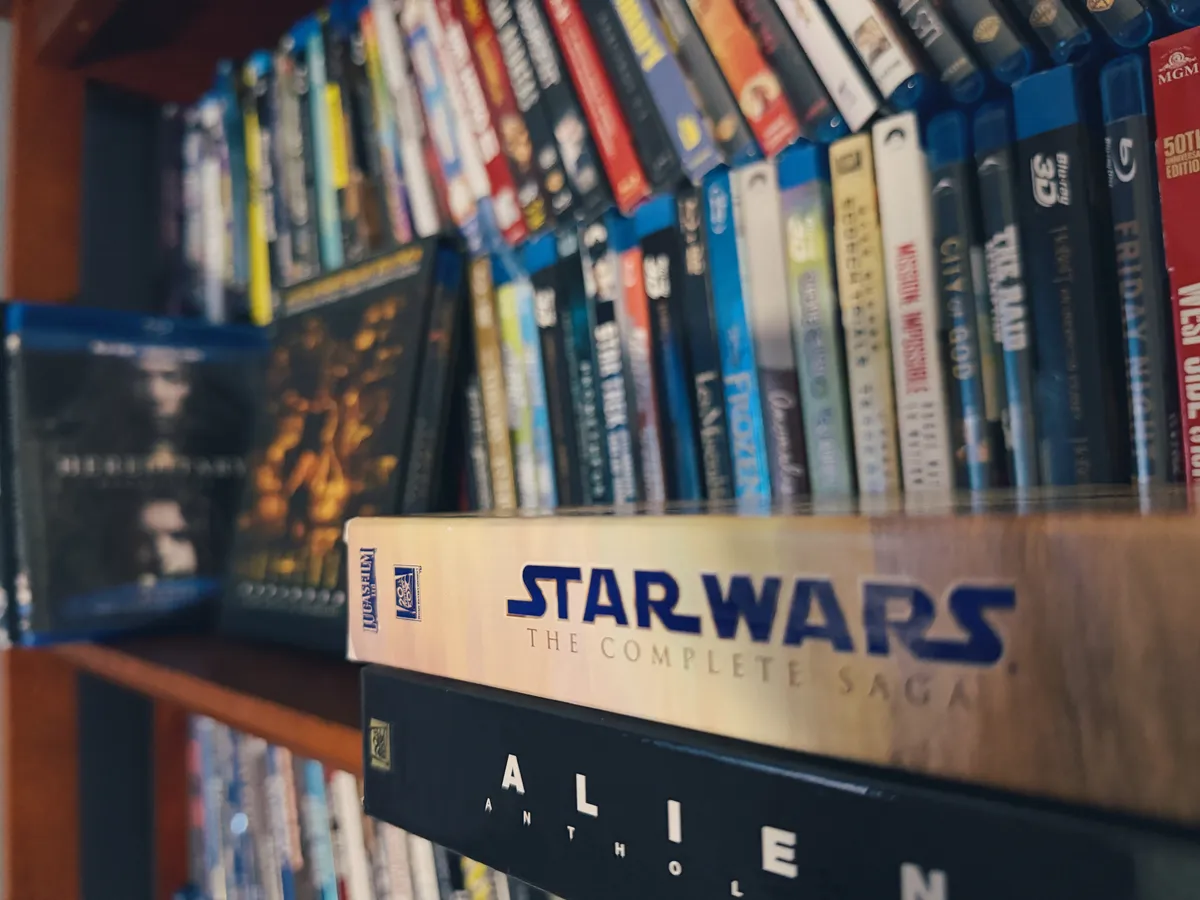
What I love about all of these is that none of them reads like a museum. Nobody is opening a video store as a monument to the 1990s. They're opening because people keep showing up: waitlists, memberships sold before the doors open, eight thousand visitors to a pop-up. Little Movie Store is an approved reseller for Criterion, Arrow, MVD and A24 now, so it's stocking new releases next to the old favourites. These are working businesses with a customer base, not nostalgia projects.
And look at where the stock comes from. The Wises built their library from personal collections, thrift stores, eBay, Facebook Marketplace and donations. Saturn Video started as a few hundred titles carried from pop-up to pop-up. Every one of these stores began as somebody's shelf.
That's the part that makes me smile, as a collector. We tend to think of our collections as private things. A shelf in a basement, a room nobody else goes in, a spreadsheet only we understand. But a video store is just a collection that got too big, and too good, to keep to yourself. Somebody looked at their shelves and thought: other people should get to borrow this.
There's one more thing these stores get right, and it's easy to miss if you only read about the inventory. A video store was never just shelves. It was the one-sheet taped in the front window for the big Friday release. The cardboard standee by the counter that nobody was allowed to take home. The TV behind the register playing whatever the clerk felt like that afternoon. You knew what was new before you'd picked up a single box, because the walls told you.
The new wave clearly remembers this. Cinema Cellar stocks movie merchandise alongside the discs. The pop-up shop at the Chicago film festival's Physical Media Fair last weekend put posters on the list right next to the discs. Nobody needs a poster to watch a film. People buy them anyway, because a poster is how a film announces itself in a room.
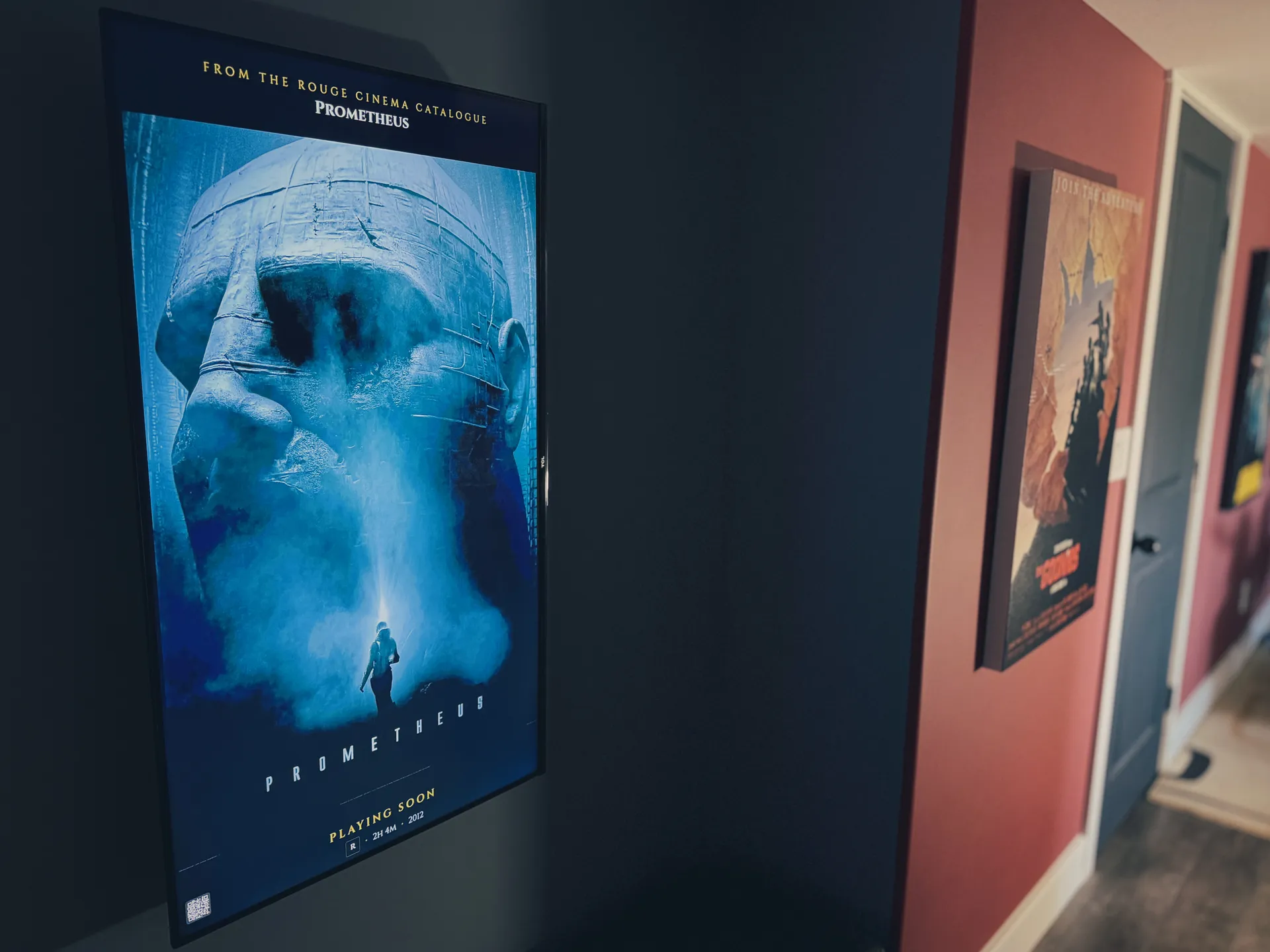
Collectors have been building their own version of that for years. Walk into a good home theater and you'll usually find the same ingredients as a video store front: framed one-sheets, a few favourites face-out, maybe a lightbox. Some people go further and mount a TV vertically on the wall, so it's shaped like a poster case outside a cinema.
I'll admit that's the one I wanted. I'd wanted a digital poster for a really long time, a screen on the wall cycling through art from films I actually own, the way a cinema lobby rotates what's playing. For years it stayed on the someday list. Then two things changed. Arkiv became the home for my collection, which meant the list of everything I own already existed in one place, artwork included. And moderately sized TVs got cheap enough that I could finally justify one. Building a digital poster into Arkiv felt like the obvious next step. I didn't build it because the platform needed another feature. I built it because I wanted one on my own wall.
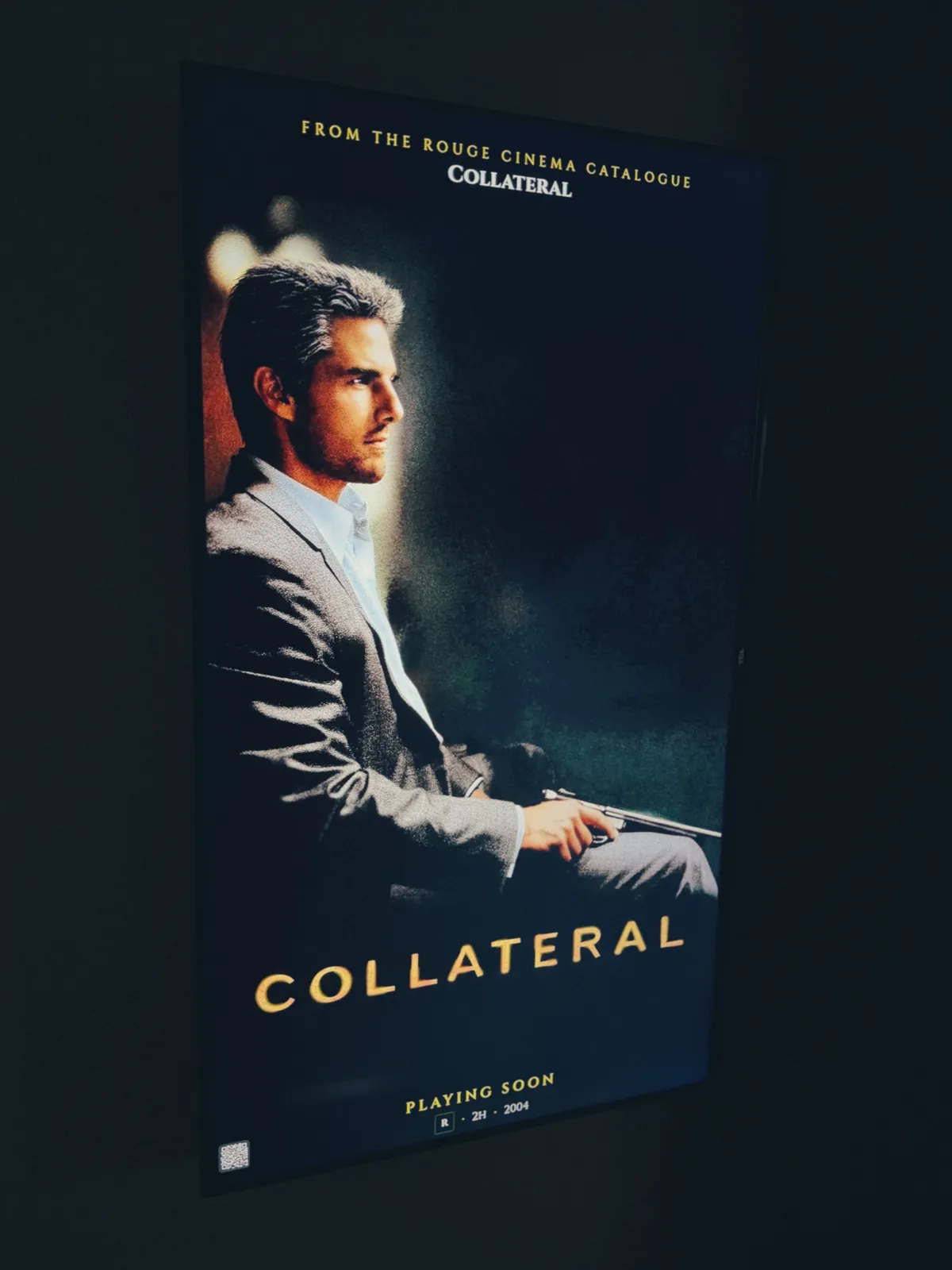
It's the store window again, except every title in it is already on your shelf. And I like it more than I can easily explain. A video store window was always an invitation: here's what we've got, come in and look. A poster on the wall at home is the same invitation, made to whoever walks into the room. It tends to start the same conversation, too. "Wait, you own that? Can I borrow it?"
I still stream plenty, and these stores don't need streaming to fail in order to succeed. They're doing something streaming doesn't try to do. You walk in, somebody who loves movies hands you something you'd never have picked, and you bring it back next week and tell them what you thought. That conversation was always the best part of the video store. It turns out people still want it.
If there's one opening near you, go. Get the card. Rent something with a ridiculous cover. Tell them what you thought when you bring it back.
And if there isn't one near you yet, take a look at your own shelves. You might already be running a very small video store for the friends who keep asking to borrow things.
Arkiv is a platform for keeping track of your collection, physical and digital, including who has borrowed what, so your own small video store never loses a disc. There are some fun things to uncover as your collection grows. Open your shelf on Arkiv.
0 Comments
Sign in to join the discussion.