The Walk Was the Point
The Red Rooster was a convenience store. The owners had carved out a corner near the back for VHS tapes. In a small town in 1985, this was an event.
The Red Rooster was a convenience store. Chips, pop, slushies, cigarettes. The owners had carved out a corner near the back, lined it with VHS tapes, and for a small town in the early 1980s, this was an event.
They weren't alone in figuring this out. Wilkie Studios, a photography studio on the main drag, started carrying rentals. So did Janna Electric, the local electrician's storefront. Three rental "stores," none of them stores. The town had maybe two copies of any given new release spread across all three locations. Getting the film you wanted on a Friday night was a competition with every other family in the area. You checked the Red Rooster. You walked to Wilkie Studios. If it was gone there too, you tried Janna Electric and hoped.
This was the experience. Nobody complained about it.
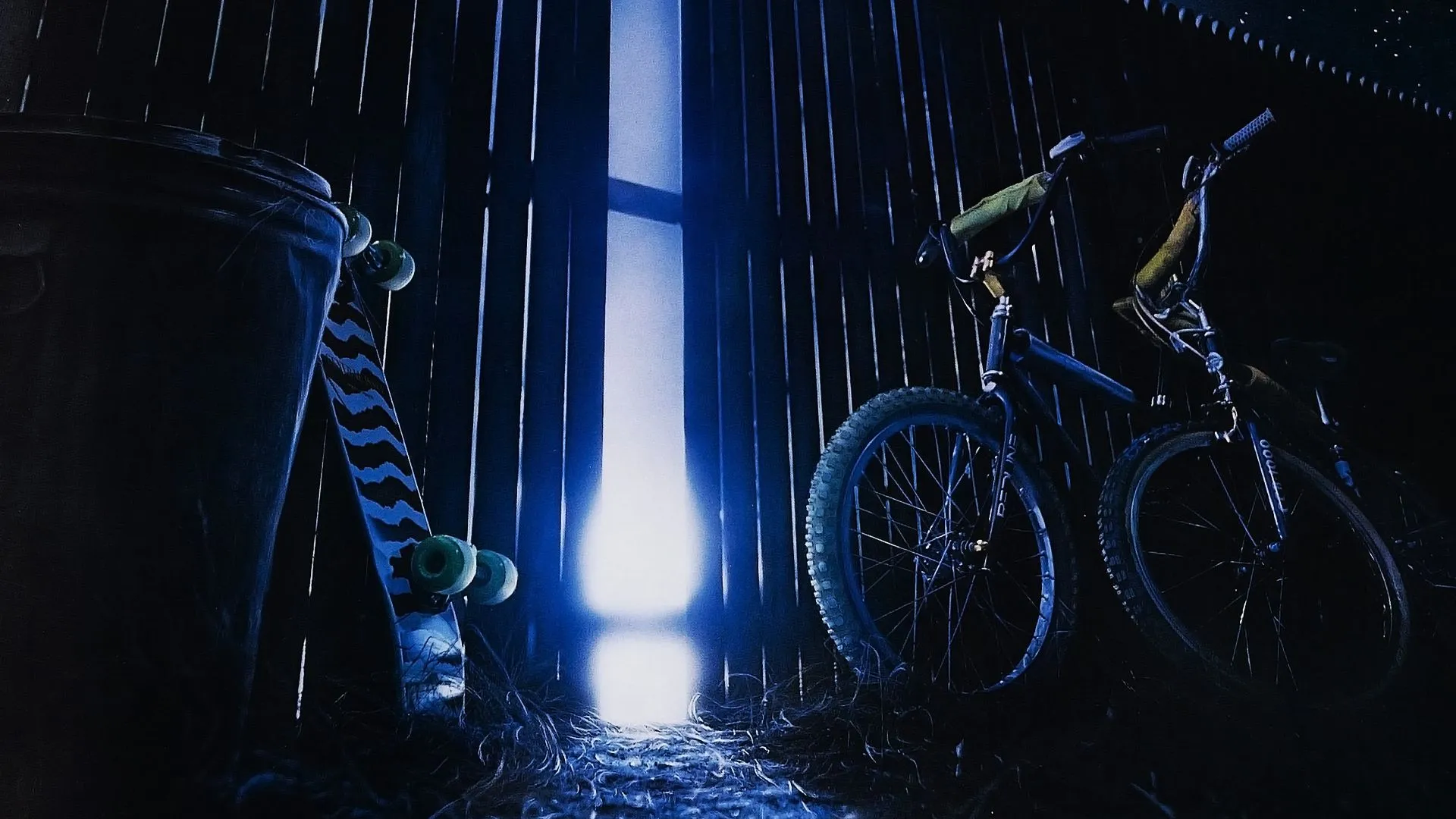
On one of my birthdays, I was maybe ten or eleven, I had a couple of friends over for a sleepover. We went to The Red Rooster and came back with Explorers, a 1985 Joe Dante film about three kids who build a spacecraft out of junk and a dream they keep having. We'd never heard of it. The cover looked interesting. My mom watched it with us on a 19-inch TV in the living room.

I don't know exactly what grabbed us, but something did. The adventure. The specific feeling that kids could do something enormous if they just tried. I spent years afterward daydreaming about those kids in their cobbled-together ship. It is one of the best memories I have of watching a film, and it happened entirely because a copy of it happened to be on a shelf and we happened to pick it up.
No algorithm would have surfaced that film for a ten-year-old in a small town. There was no algorithm. There was a shelf, and we looked at it.
In university I lived for a couple of years with my older brother while he was in medical school. Friday or Saturday nights we'd walk to Saskatoon Video near the apartment and pick something out, often based on nothing more than the title. We rented a lot of duds. That was genuinely part of the experience. A bad rental was still a rental: you watched it, you returned it, you had an opinion. There was something in having committed.
Later, after university, I moved across the country for a tech job. There was a Blockbuster near where I lived that I visited an embarrassing number of times, sometimes more than once in the same day. There was a pizza place next door. I'd put in my order, walk into Blockbuster, spend thirty minutes talking to whoever was working about what was worth renting. One night a manager came over and reminded the employee she was at work. I picked my films, grabbed my pizza, went home. This is a memory I return to often.
I didn't think of any of this as a ritual at the time. It was just what watching a film looked like.
When I moved back to Saskatoon around 2006, things were already changing. Saskatoon Video had been bought by Rogers and rebranded Rogers Video. It was fine. It was also different in the way that things bought up and standardized are different. The particular atmosphere of a place that had been itself for years was gone.
Then the closings started. As the stores shut down, they ran sales on their old rental stock. I bought a lot of those discs. A meaningful portion of my physical collection came directly from those sales: former rental copies, priced to clear, stickered with the chain's logo. I kept the stickers on some of them. They seem like they should stay.

Explorers isn't on my shelf. I have it in iTunes, in a digital library I don't control, in a format that technically disappears if someone decides the rights are no longer worth maintaining. The film I picked up in a convenience store as a kid, that my friends and I watched on a 19-inch TV while my mom sat with us, exists in my collection as access rather than ownership. I've been meaning to fix that.
The walk to the Red Rooster, the Friday nights at Saskatoon Video, the pizza-and-Blockbuster ritual: none of it felt like anything more than how you watched films. You didn't notice the friction was doing something until it was gone. The constraint of two films, chosen physically, returned by Sunday, was shaping the relationship to watching in a way that infinite scrolling does not. Streaming removed the constraint and the relationship changed with it.
The disc on the shelf is the closest thing I've found to what those evenings felt like. A choice you made deliberately. Something you can hold. Evidence that you decided.
What's the rental memory that stayed with you? The film that was always checked out, the copy you finally got your hands on, the store whose sticker is still on a disc in your collection: the ones from that era tend to be specific.
0 Comments
Sign in to join the discussion.